How Iowa racinos began
Iowa legalized pari-mutuel wagering in 1983, and three tracks followed within six years: a greyhound park in Dubuque in 1985, Bluffs Run in Council Bluffs in 1986, and Prairie Meadows, a horse track in Altoona, in 1989. Prairie Meadows filed for bankruptcy in November 1991, sat out the 1992 season, and was bought by Polk County in 1993.
A 1994 law offered the tracks slot machines, subject to a vote in each county. Polk County voters said yes on May 17, 1994, and the three racinos opened their machine floors in 1995, Prairie Meadows on April 1. Its first year was strong enough to pay off county bonds early, a story told in the history of racinos.
Live table games came a decade later. After the state cleared tracks to offer them, Prairie Meadows opened its tables on December 14, 2004, and the former dog tracks added theirs as well. From then on Iowa racinos offered the same casino product as the riverboats and land-based casinos, so the state never developed a video lottery model.
Iowa racinos and former tracks at a glance
| Venue | City | Racing | Gaming (September 2026) |
|---|---|---|---|
| Prairie Meadows | Altoona | Thoroughbred, Quarter Horse (live) | 1,253 slots, 40 tables, poker, sportsbook |
| Horseshoe Council Bluffs (former Bluffs Run) | Council Bluffs | Greyhound racing ended 2015 | 1,104 slots, 60 tables |
| Q Casino (former Dubuque Greyhound Park) | Dubuque | Greyhound racing ended 2022 | 550 slots, 17 tables |
Counts come from the Iowa Racing and Gaming Commission’s report for September 2026. That month Prairie Meadows posted adjusted gross revenue of about $19.5 million, the highest of all 19 licensed casinos in Iowa. Horseshoe Council Bluffs followed with roughly $11.9 million, and Q Casino about $3.9 million. Of the Iowa racinos listed, only Prairie Meadows still runs live races.
Prairie Meadows, the last live track
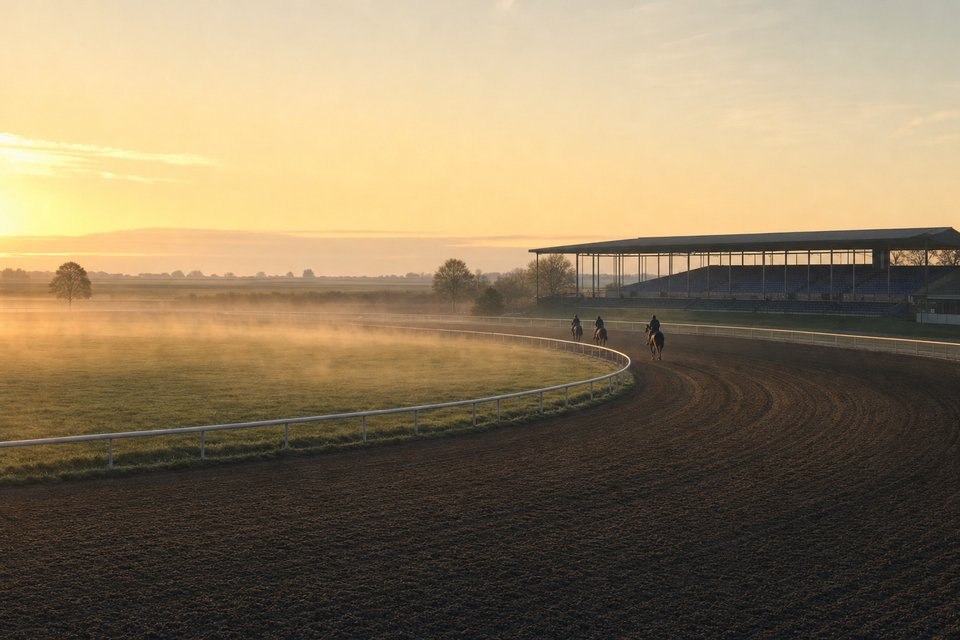
Prairie Meadows is owned by Polk County and operated by a non-profit board, so its profits go to county budgets and community grants. The one-mile dirt oval races Thoroughbreds and Quarter Horses each summer, and the casino, poker room, hotel and event center stay open year-round. In August 2026 the county approved a new 15-year lease with the operator.
The building sits beside Interstate 80 at exit 142, east of Des Moines. Its biggest racing weekend is the Iowa Festival of Racing in July, built around the Grade 3 Cornhusker Handicap and the Iowa Derby, and the meet ends with the all-Iowa-bred Iowa Classic. The Prairie Meadows page covers dining, the hotel and the full schedule.
The greyhound casinos in Council Bluffs and Dubuque
Bluffs Run opened as a greyhound park in February 1986 and added slots in March 1995. Harveys Casino Resorts bought it in 1999, Harrah’s acquired Harveys in 2001, and an $85 million expansion in 2006 brought the Horseshoe name. Since 2017 VICI Properties has owned the real estate, with Caesars running the casino and an adjoining Hilton Garden Inn.
Dubuque Greyhound Park opened on June 1, 1985, on the Mississippi riverfront. It became Dubuque Greyhound Park and Casino in 1995, Mystique in 2009 and Q Casino in 2017, run throughout by the non-profit Dubuque Racing Association. Under that model, as at Prairie Meadows, earnings fund local projects rather than a corporate owner.
Why dog racing ended
A 2014 settlement allowed the two casinos to separate from greyhound racing. Council Bluffs stopped racing at the end of 2015 and agreed to pay the Dubuque track $4.6 million a year through 2022, while Q Casino paid $500,000 a year through 2021. With those payments ending, the Dubuque operator asked for one short final season.
Iowa Greyhound Park ran its last 18-day meet in April and May 2022 and closed on May 15. Breeders had already cut back after Florida voters banned dog racing in 2018, and too few greyhounds were left for a full schedule. Since then live greyhound racing in the United States survives only at two West Virginia racinos.
Regulation, purses and the 21 age rule
The Iowa Racing and Gaming Commission handles both halves of the business. It licenses every track and casino, approves race dates and purse agreements, and publishes monthly figures by facility. One agency for both racing and gaming is less common than it sounds: many racino states split the work between a racing commission and a gaming or lottery regulator.
Purse money is fixed in statute. The Polk County track must pay at least 11 percent of its first $200 million in net receipts and 6 percent above that, plus 4 percent of sports wagering receipts. The commission divides the total 76 percent to Thoroughbreds, 15.25 percent to Quarter Horses and 8.75 percent to harness racing at county fairs.
Every wager at Iowa racinos and casinos carries the same age floor: 21. That covers slots, table games and sports bets, and also pari-mutuel bets on horse races, which some neighboring states allow at 18. Younger visitors may not enter gaming floors or wagering areas. Anyone planning a casino visit should decide on a spending limit before arriving.
Iowa horse racing tracks and the 2026 calendar
Iowa horse racing tracks with pari-mutuel betting now come down to Prairie Meadows. Its season runs roughly from Kentucky Derby Day to late September, with Thoroughbreds opening the meet and Quarter Horses joining in June. Casinos across the state, including the two former dog tracks, keep simulcast betting open all year for out-of-state races.
| Date (2026) | Prairie Meadows racing |
|---|---|
| May 2 – June 7 | Thoroughbreds only, 18 days |
| June 8 – September 26 | Thoroughbreds and Quarter Horses, 56 days |
| July 10–11 | Iowa Festival of Racing |
| September 26 | Iowa Classic, closing day |
Post times in 2026 were 6:00 p.m. on Fridays and Saturdays and 4:00 p.m. on Sundays and Mondays. The commission approves the dates, and a three-year calendar agreement with horsemen covers the coming seasons. Dates for horse racing tracks in other states, including Nebraska and Minnesota, are collected on the horse racing schedule page.
Casinos without tracks and sports betting
Most Iowa casinos never had a track. The state was the first to legalize riverboat gambling, in 1989, and today licenses 19 casinos, including riverboats, land-based resorts and the three former racetrack venues. Tribal casinos operate separately under federal compacts. Iowa casinos with hotels are common, so overnight trips rarely depend on a racino.
Sports betting arrived in 2019, and Prairie Meadows now runs a retail Caesars Sportsbook. The law sends 4 percent of sports wagering receipts at the Polk County track to racing purses, which ties the newest form of betting to the oldest. How pools and takeout work at the windows is explained in the pari-mutuel betting guide.
Iowa racinos compared with neighboring states
Nebraska has moved fastest of Iowa’s neighbors, adding casinos at its tracks after a 2020 vote. WarHorse Omaha sits just across the Missouri River from Council Bluffs, and the Nebraska page lists the rest. In Minnesota, the two tracks offer card rooms rather than slots, and Illinois now has a racino at Fairmount Park in Collinsville.