racinos.us
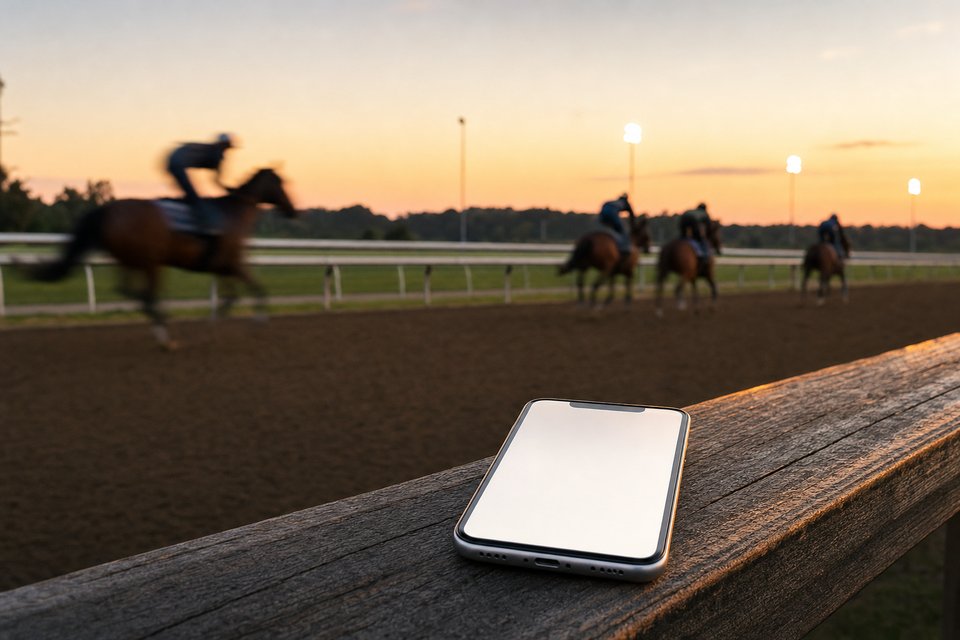
A phone showing a horse race on its screen, resting on a wooden rail beside a dirt track at dusk (AI-generated image)
AI · AI-generated image
Betting from home, state by state

Online Horse Racing Betting and Online Casino: Legal States, ADW Apps

Online horse racing betting is legal in most US states through advance-deposit wagering apps, while real-money online casinos run in only seven. This guide covers the three states where both are legal and listed here: West Virginia, New Jersey and Michigan, and it explains how each market ties its online brands to land-based licenses.

Racinos sit at the center of that story in West Virginia, where an online casino brand has to operate under the license of a land-based casino, and several of those casinos are racetracks. New Jersey and Michigan have no racinos, so their online brands trace back to Atlantic City and Detroit.

The three states at a glance

Online casinos are 21+ in all three states, and every app checks that the player is physically inside the state.

Every licensed brand, state by state

Brand and reviewProductLegal inRead the review
DraftKings CasinoDraftKings Inc.Read the review Online casino WVNJMIWV, NJ, MI Read review
Golden Nugget Online CasinoGolden Nugget Online GamingRead the review Online casino WVNJMIWV, NJ, MI Read review
BetMGM CasinoBetMGM LLCRead the review Online casino WVNJMIWV, NJ, MI Read review
BetRivers Casino & SportsbookRush Street InteractiveRead the review Online casino WVNJMIWV, NJ, MI Read review
bet365 Casinobet365 groupRead the review Online casino WVNJMIWV, NJ, MI Read review
Hollywood CasinoPENN EntertainmentRead the review Online casino WVNJMIWV, NJ, MI Read review
Caesars Palace Online CasinoCaesars EntertainmentRead the review Online casino WVNJMIWV, NJ, MI Read review
Horseshoe Online CasinoCaesars EntertainmentRead the review Online casino WVNJMIWV, NJ, MI Read review
Fanatics CasinoFanatics Betting and GamingRead the review Online casino WVNJMIWV, NJ, MI Read review
Hard Rock BetSeminole Hard Rock DigitalRead the review Online casino NJMINJ, MI Read review
Borgata OnlineBetMGM LLC for Borgata Hotel Casino & SpaRead the review Online casino NJNJ Read review
Bally Bet CasinoBally's CorporationRead the review Online casino NJNJ Read review
BetParx CasinoGreenwood Gaming and EntertainmentRead the review Online casino NJNJ Read review
TwinSpiresChurchill Downs IncorporatedRead the review Race betting WVMIWV, MI Read review
FanDuel RacingFanDuel GroupRead the review Race betting WVWV Read review
AmWagerAmWest EntertainmentRead the review Race betting WVWV Read review
4NJBetsTVGRead the review Race betting NJNJ Read review
MonmouthBetsBetMakers MTSRead the review Race betting NJNJ Read review

How this list was built

The table covers the 18 online casino and race betting brands listed here for West Virginia, New Jersey and Michigan. A casino brand is included when it holds a state license, checked against the operator lists of the West Virginia Lottery, the New Jersey Division of Gaming Enforcement and the Michigan Gaming Control Board.

A racing app is included when the state accepts it and the app's own eligibility terms name the state. Welcome offers on the state pages were read on each operator's own pages on October 20 and 21, 2026, and are read again every month. Each review lists the sources behind its facts.

How an online race bet travels

  1. AccountThe bettor funds an advance-deposit wagering account with an app licensed or accepted in their state.
  2. PoolThe wager joins the pari-mutuel pool at the track running the race, alongside on-track and simulcast bets.
  3. TakeoutTakeout comes off the pool before payout, and a share returns to the host track and its horsemen as a host fee.
  4. PayoutWinning tickets share what is left of the pool, and the app credits the winnings to the account.
The pari-mutuel guide explains pools and takeout in detail, with a live play-money tote.

The map for race betting is far wider than the one for casino apps. At least one national advance-deposit wagering operator accepts residents in most states. In some, such as California, Illinois and Virginia, state law licenses ADWs directly and collects fees or taxes from them; in others the practice simply is not prohibited.

A few states sit outside that map. Hawaii and Utah prohibit gambling altogether, so residents there cannot wager on races online. Michigan nearly joined them in 2025, when its regulator told every ADW to stop taking Michigan accounts from January 1. TwinSpires fought the order and won its federal case, and for Michigan this site lists TwinSpires.

The practical upshot for anyone comparing legal states: online horse racing betting covers most of the map, from Kentucky and New York to California, while an online casino account works in only a handful of them. Someone who lives in Ohio or Maryland can bet a race on an app, but cannot legally play online slots for money.

Even inside the legal states, each app picks its own coverage. Track exclusions are common: an ADW may accept a state’s residents but block bets on races at that state’s own tracks because it has no deal with the local horsemen. The operator listing on each state page here shows which apps currently accept accounts in that state.

How online horse racing betting works through an ADW

An advance-deposit wagering account works like a betting wallet. You fund it first, by card, bank transfer or cash at a partner track, and then place wagers that the app sends into the pari-mutuel pools at the host track. Your $2 exacta lands in the same pool as a bet placed at the windows.

Online horse racing betting carries the same takeout as betting at the track: the percentage the host track removes from each pool before paying winners. Takeout varies by track and by bet type, usually rising for exotic wagers such as trifectas and pick fours, and it is set by each racing state, not by the app.

The legal backbone is the federal Interstate Horseracing Act of 1978, amended in 2000 to cover wagers placed by phone and other electronic media. It requires consent from the host track, its horsemen and the racing commission before a bet crosses state lines, which explains why a track sometimes vanishes from one app’s card and turns up on another.

Because payouts come from the pool rather than from the operator, the odds on an ADW are the same tote odds shown at the track. What differs between apps is the extras: race video, handicapping data from Daily Racing Form or Equibase, rebates for larger players, and which tracks each one carries on a given afternoon.

The best-known names are TwinSpires, owned by Churchill Downs Inc.; FanDuel Racing and TVG, both part of FanDuel; plus AmWager, run by AmWest Entertainment, and Xpressbet, part of 1/ST. Each state page lists the ones that accept accounts there, with any closed-market rules and excluded tracks spelled out in plain terms.

Fixed-odds race betting is a separate product and much rarer. New Jersey allows it, and MonmouthBets offers fixed-odds wagering on races to residents of that state, where the price is locked when the bet is placed instead of moving with the pool. Most of the country still treats horse racing as a pari-mutuel-only game.

Online casino states and the three covered here

Real-money online casinos are a far smaller club. Seven states run them in October 2026, and this guide covers the three it lists: New Jersey, live since November 2013; West Virginia, since July 2020; and Michigan, since January 2021. Maine legalized online casinos in 2026 but expects no launch before 2027.

The three markets differ in size. Michigan reported $302.8 million in iGaming gross receipts in July 2026, while New Jersey, the oldest market, saw online casinos out-earn its Atlantic City casino floors across 2025. West Virginia’s market is smaller than both, with its brands tied to a handful of racetrack casinos and one resort.

Each online casino state uses its own regulator. New Jersey has the Division of Gaming Enforcement and Michigan the Gaming Control Board, while in West Virginia the Lottery Commission oversees online casino play and the separate Racing Commission covers the tracks. All three set the online casino age at 21.

Racino licenses behind WV online casino brands

Here the racino story and the online one meet. West Virginia attaches every online casino to a land-based license, and the four racetrack casinos hold most of them. An online casino brand is either the casino’s own label or a national operator running under that casino’s license, sharing revenue with the property.

West Virginia’s 2019 Interactive Wagering Act gave one online license to each of the four racetrack casinos and to The Greenbrier resort, with up to three operators per license. The Mountaineer racino and Charles Town both sit on that list, and the Lottery Commission approves every operator that launches under them.

DraftKings went first, launching in July 2020 under Hollywood Casino at Charles Town Races. Other national brands followed under the same racetrack licenses, and the Lottery Commission approves each one before it launches. The West Virginia online guide lists the brands now live in the state, with the offer terms for each.

State guides for each online casino market

The Pennsylvania state page covers the six racinos there as venues, with their racing calendars, gaming floors and track history. It is an editorial guide to the tracks themselves, so it carries no online casino listings or offers, and it links to each venue page for the details on racing days and facilities.

The West Virginia guide sticks to venue and brand pairings that the Lottery or the casino operators themselves confirmed, explains the split between the Lottery Commission and the Racing Commission, and covers betting on Charles Town and Mountaineer races from a phone. It also notes which casinos double as racetracks.

The New Jersey guide explains why the state has online casinos but no racinos: online licenses belong to the nine Atlantic City casinos, while Monmouth Park and the Meadowlands run racing with no slot floor. The Michigan guide covers the Detroit casinos, the tribal operators and the court fight over race betting apps.

Checking an online casino or race betting app is licensed

Every regulator in these states publishes the brands it has approved. Before signing up, compare the app’s name and its legal entity against that list; the operator’s terms page should name the land-based partner and the license number. A missing license reference, or an offer open to every state at once, is a reason to walk away.

Location checks are another tell. A licensed online casino will ask for location permission and refuse to load games until it confirms you are inside the state, and it will verify your identity and age before the first withdrawal. Sites that skip those steps are not regulated in the US.

Limits, self-exclusion and getting help

Licensed apps in all three states have to offer tools to keep play in check: deposit limits, wager and time limits, cooling-off periods and self-exclusion. Each state also keeps a self-exclusion list that covers online play. The responsible gambling page walks through the options and lists the helplines for each state.

The same applies to online horse racing betting. ADW accounts carry deposit limits and self-exclusion options too, and the major apps show a running history of wagers and results. Setting a monthly budget before the first deposit, and treating any money staked as spent, keeps a day of handicapping from turning into a habit that costs more than planned.

From the rail

Frequently asked questions

Is online horse racing betting legal in my state?

In most of the country it is. Most states allow residents to bet on races through an advance-deposit wagering account, often because state law licenses it and sometimes because no law forbids it. Hawaii and Utah ban all gambling, so they have no legal route at all. Each app still sets its own list of accepted states.

What is the difference between online horse racing betting and an online casino?

Race betting is pari-mutuel: your stake joins a pool at the host track, the track takes a cut, and winners share the rest. An online casino offers slots and table games against the house, licensed by a state gaming regulator. The legal bases differ, which is why race apps reach far more states than casino apps.

Which states have legal online casinos?

Seven states run real-money online casinos in October 2026. This site covers three of them, New Jersey, West Virginia and Michigan, where several licensed brands compete. Maine passed a law in 2026, but its regulator has pointed to early 2027 at the soonest, so nothing there is live yet. Nevada licenses online poker only.

Do I have to live in the state to use an online casino there?

No, but you must be physically inside the state when you play. Every licensed app checks your location through your phone or a browser plug-in before each session and blocks wagers from across the line. Residency matters more for race betting apps, which usually ask for a home address in an accepted state at sign-up.

How old do you have to be for online horse racing betting?

State law sets the floor, and it varies. New Jersey and West Virginia allow pari-mutuel wagering from 18, while online casinos in all three states covered here require players to be 21. Some race betting apps apply a higher age than the state minimum, so the sign-up screen of each app gives the rule that applies.

Can a racino run its own online casino?

In West Virginia, yes. The online license belongs to the land-based casino, which can run its own brand or let partners operate under it. DraftKings launched in July 2020 under Hollywood Casino at Charles Town Races, and each of the four racetrack casinos can hold a license with up to three operators under it.

Are offshore betting sites legal in these states?

No. Sites that are not licensed by the state regulator operate outside US law, offer no state-backed protection for deposits and do not join the self-exclusion lists. Michigan's Gaming Control Board sent cease-and-desist letters to 33 offshore operators in October 2026. Each regulator publishes the list of approved brands, and anything missing from it should be avoided.

Where does online horse racing betting money go?

Each wager on a licensed app flows into the pari-mutuel pool of the track running the race, and a share of the takeout returns to that track and its horsemen as a host fee. States that license ADWs also collect fees or taxes, which in several places are earmarked for purses and breeding programs that keep live racing running.

Can I watch races in an online horse racing betting app?

Most major apps stream live video or replays of the races they carry, typically once the account is funded or a bet is placed. FanDuel Racing and TVG are tied to the FanDuel TV channel, and TwinSpires offers race video to its account holders as well. Track rights change, so a given race may be bettable without a stream.

Why does New Jersey have different race betting apps?

New Jersey runs a closed account wagering system. Since July 1, 2026, a new managing vendor has run it under an agreement between Darby Development and the New Jersey Sports and Exposition Authority, alongside the TVG-run 4NJBets. Any other platform needs approval from that managing vendor, Darby Development and the New Jersey Racing Commission before it can accept state residents.

What happened with online race betting in Michigan?

Michigan's regulator told all ADWs to stop taking Michigan accounts from January 1, 2025, because the state had no licensed track. TwinSpires refused and sued. The Sixth Circuit sided with it in December 2025, and a federal judge granted summary judgment in January 2026. For Michigan, this site lists TwinSpires.

Where can I get help if gambling stops being fun?

Call 1-800-GAMBLER in New Jersey and West Virginia, or 1-800-270-7117 in Michigan. Both lines are free and confidential. Every licensed app also lets players set deposit, time and loss limits, take a cooling-off break or join the state self-exclusion list, and the site's responsible gambling page explains how each tool works.

Sources

  1. Michigan Gaming Control Board: July 2026 iGaming and online sports betting revenue content.govdelivery.com
  2. West Virginia Lottery: first iGaming operator approved (July 15, 2020) publicgaming.com
  3. Daily Racing Form: Federal court issues summary judgment in favor of Churchill in Michigan case (January 8, 2026) racingcommission.nd.gov
  4. SBC Americas: Maine iGaming regulator targets early 2027, with work ahead (October 19, 2026) sbcamericas.com